
Wed 6th May
Last night I booked a Beaver Walk for today, but it wasn’t until 7pm, so I had a day to fill before then. I realised I needed some milk and could do with some other supplies like some veg and chocolate and wasn’t sure there would be many places before Oban, and I wasn’t planning on getting there by the end of today. I decided to head back to Lochgilphead, as it was only around 7 miles, so not too far in grand scheme of things. While on the way there I passed a sign for Dunadd Fort. I hadn’t passed this on the way into Kilmartin as I’d gone via the canal, but had read about it at the Kilmartin Museum and had considered going, so it was a nice surprise reminder to see the signs. I turned down the country lane towards it and parked up in the pretty setting under the hill, with a stone bridge and river trickling by. Another sunny day, I really have been blessed, or maybe, as I often think when I’m at work, we do actually have a lot more nice days than we realise. It’s just that they are not scorchers, like we crave for a weekend (then subsequently moan about). But I have often thought while at work that we do not consider all the nice days we miss out on because we are stuck inside.
As mentioned in yesterday’s post, the Dunadd Fort dates from the iron age as a fort, and was a centre of royal power when the ancient kings of the area would be inaugurated there from around 500 AD. The kingdom at that time was called Dalriada, which they say gave way to modern Scotland. It is thought to have been a centre for craft makers, jewellers, to sell their wares. Evidence of brooches and beads have been found there, which show how opulent the people of that time lived and traded in exotic goods from further afield including Europe.
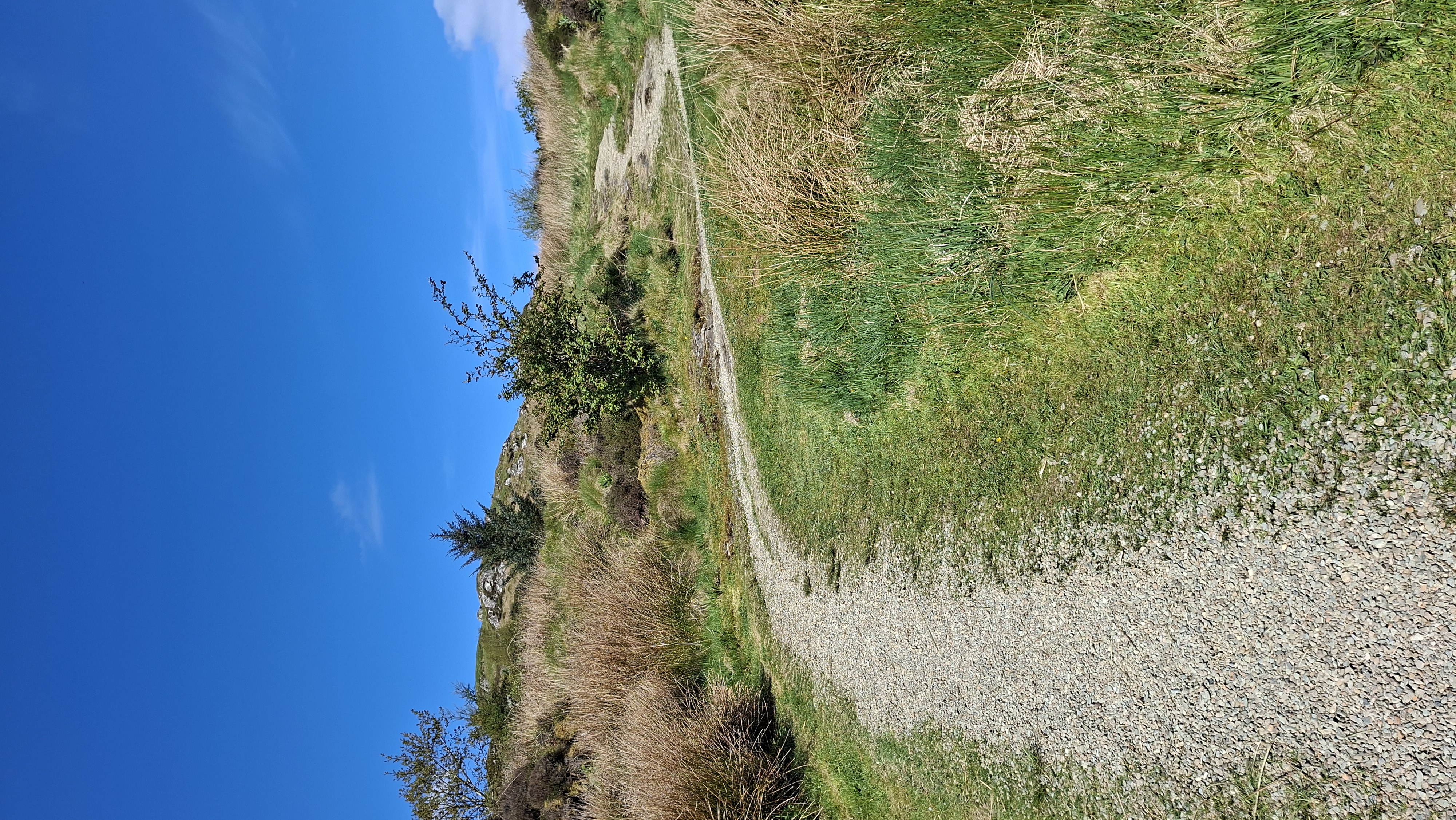
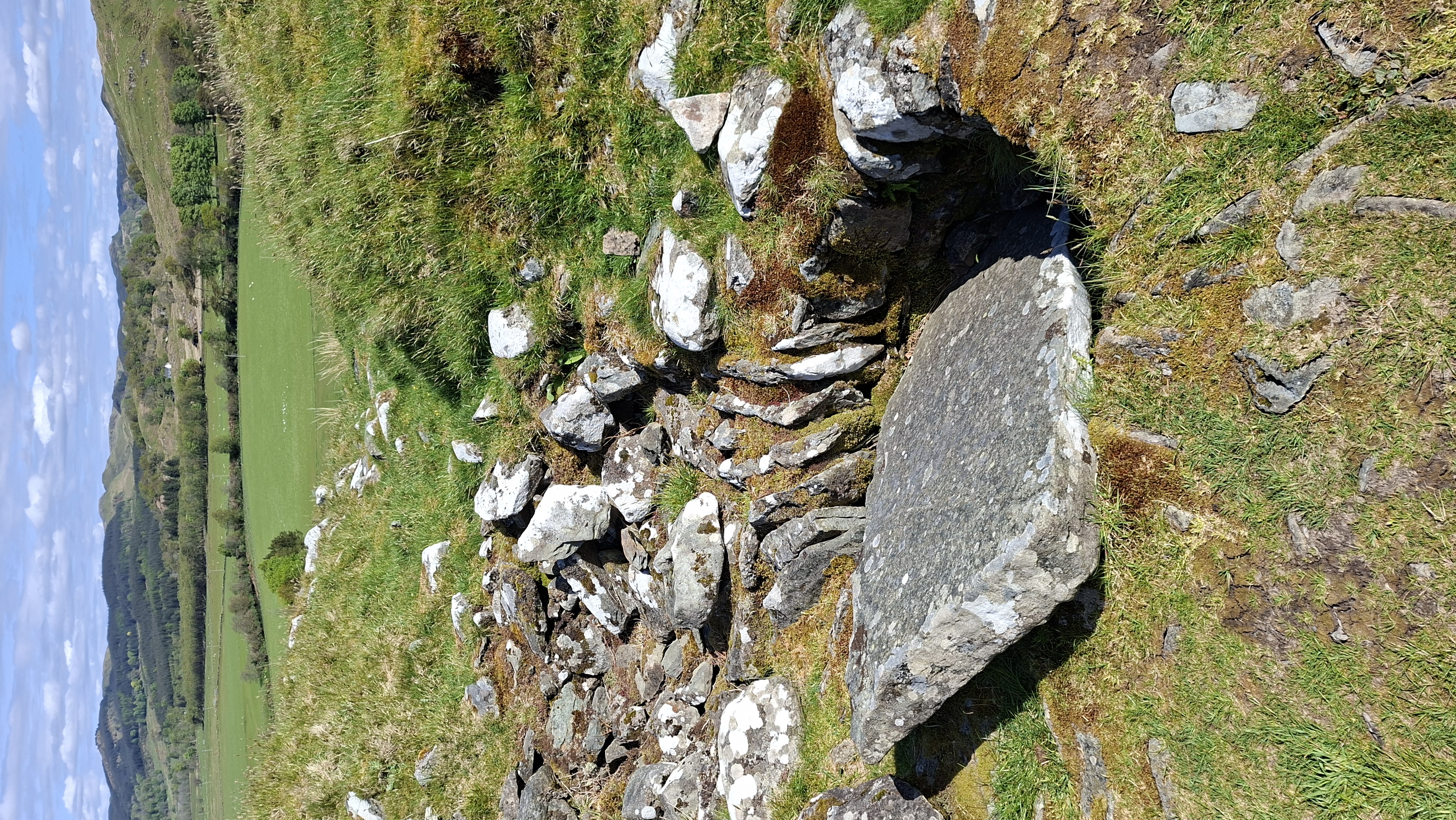
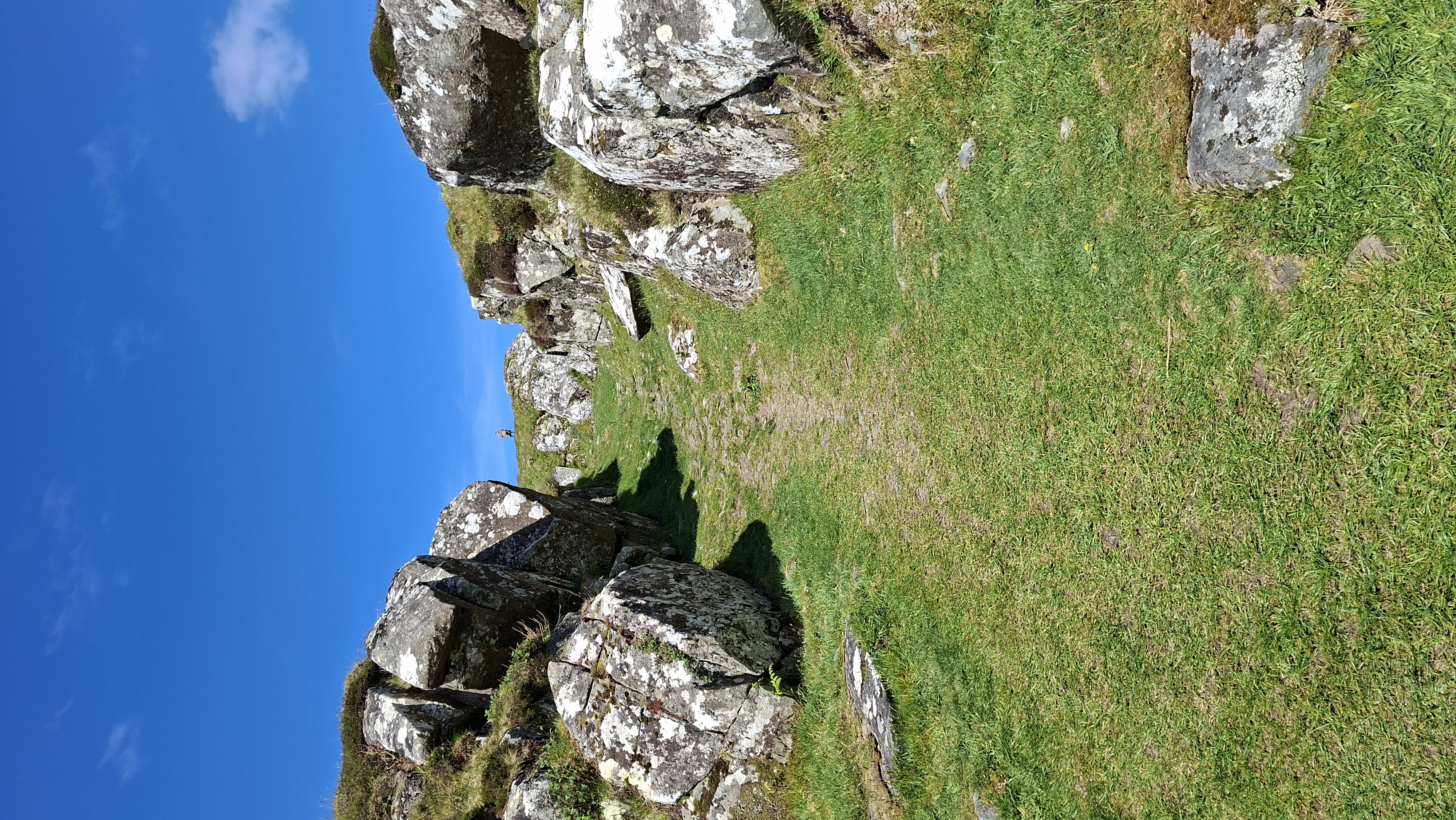
The walk up to the fort is quite rocky and would be tricky for people not steady on their feet. Its not a massive hill, so you quickly reach what remains of the battalions, where the people would enter the gates of the fort. Within this initial area you can see traces of walls from workshops potentially, and a little further round you find the old well that would have been used in the fort. Theres not a huge amount to view, not like any medieval castle, but you can certainly see the footprints of a fort and imagine the people milling around this outcrop above their kingdom. Talking of footprints, near the top of the fort, if you go up another level, is what’s believed to be the inauguration stone. This is now a plaster cast placed on top of the original in order to preserve it, but it looks authentic and gives you a connection to the past. This is where they believe the kings of the past would be chosen and inaugurated by placing their foot in the foot shaped marking in the rock. Obviously I placed mine in there, so declare myself king of Scotland! Until the next tourist comes along!
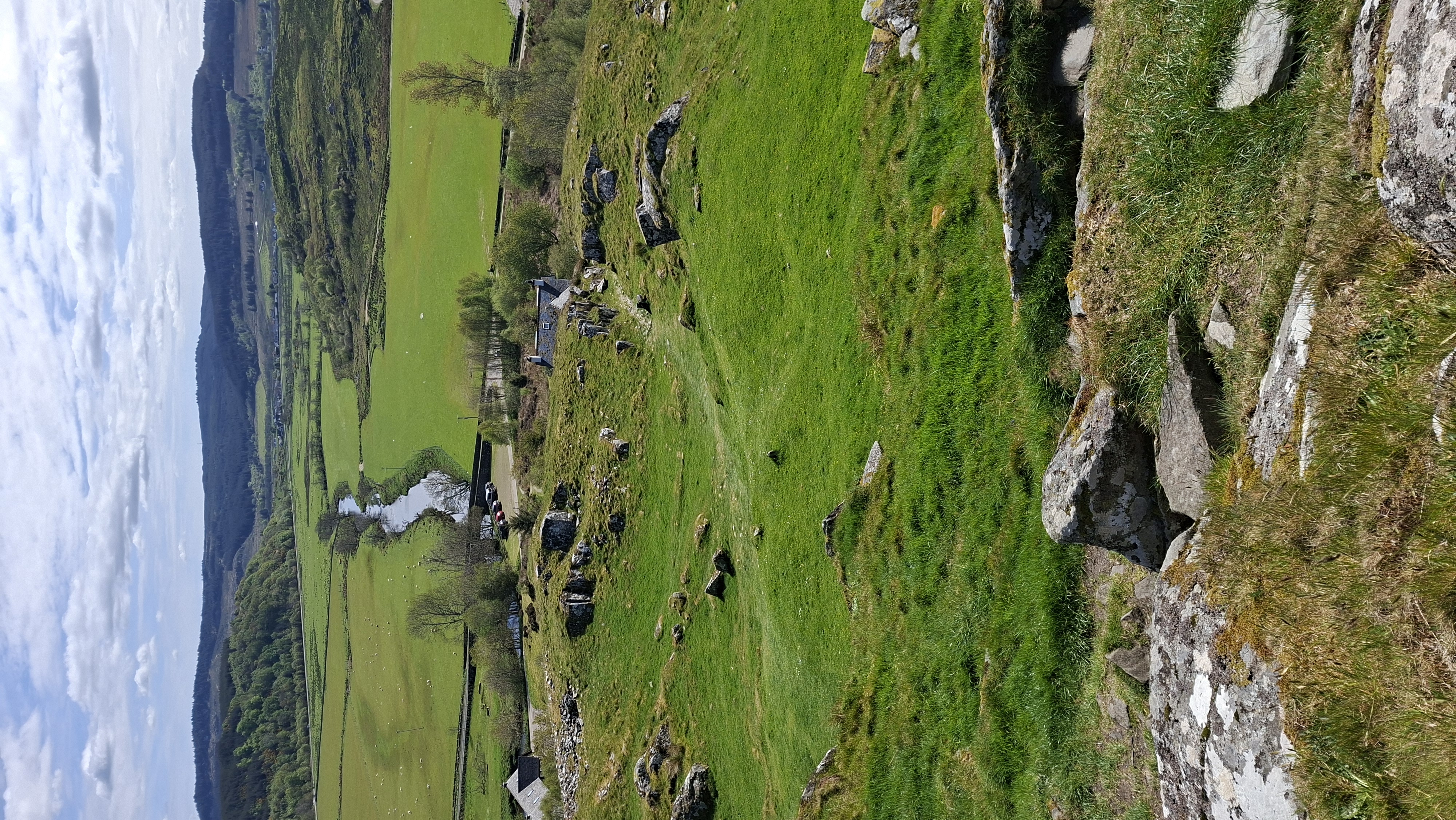
As I say it’s only a small hill, but on reaching the top you can see how advantageous it was in regard to defence. You can see for miles, so would be well prepared for any looming attack. With the bog below it is an unattractive prospect to trudge through the soft, wet ground in battle.
On my way down from the fort the local farmer was on his way to feed the cows, and they obviously were aware of this and let off an almighty moo fest, the cows bellowing for everyone to attend lunch. I’m not sure what the farmer gave them, because I only saw him take in two pillow sized bails of whatever it was to share between possibly 50 cows, which didn’t seem enough. Maybe a condensed nutrient rich food type. Now on the subject of food, at this point after I returned to the van I continued onto Lochgilphead to go collect my supplies. While there I spotted a tick extractor in the pharmacy, as after reading my friends Cape Wrath adventure and the possibility of ticks in the longer grass, AND how small they can be, I decided to purchase something to remove them with. I have been meaning to for a while, but it’s never been urgent. I decided I’d better get one before I was in a situation where I was stuck with a tick on me and not sure what to do. I have heard you can remove them with tweezers, but I have also read that this is not recommended.
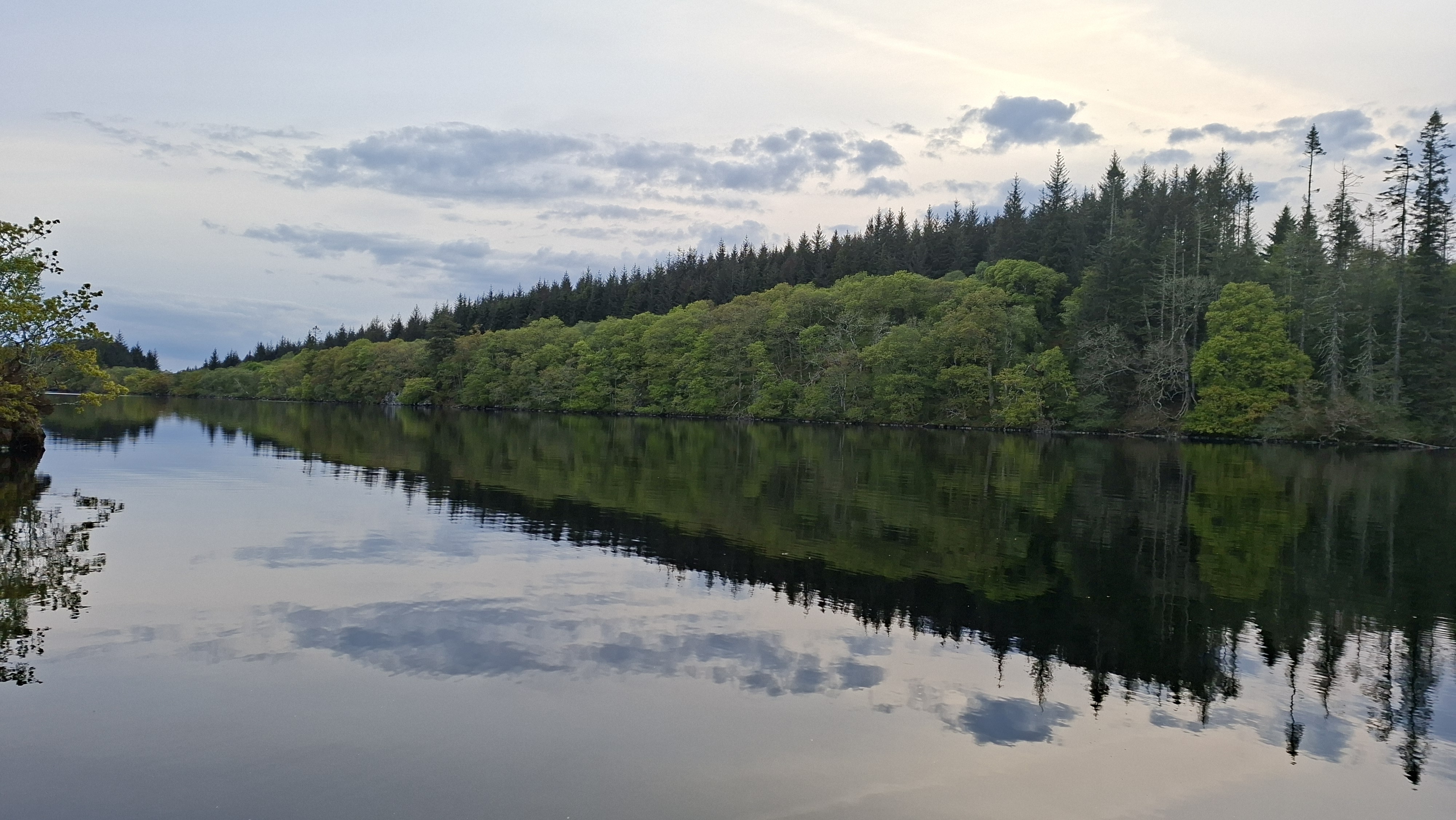
After chilling in the van at the Lochgilphead FREE (again) car park and having a packet pasta dinner, I headed off to the Beaver Walk. This wasn’t far from the Crinan Canal, actually on the other side of it to that of the Big Moss, in an area classed as temperate rainforest. I hadn’t realised Scotland had these environments, but apparently it used to be covered in these tree filled areas, before we chopped everything back to allow for farming and forestation. Temperate rainforests are not the pine forests you see a lot of in Scotland, those are for commercial logging purposes. Temperate rainforests consist of a good mix of trees and undergrowth. They are not like rainforests in the amazon, which are tropical and require the higher temperatures of the equator. These are a lower temperate, but regulated, due to the climate created by the weather from across the Atlantic, travelling up the gulf stream. These generally average out at 12 degrees Celsius throughout the year.
We were meeting at 7pm for the walk as this was the time the beavers would start to become active. They are not nocturnal, but they come out to feed at dusk and dawn, with a kind of siesta in the middle of the night. Geared up with my skin so soft (apparently a reliable midge repellent) and my head net, we all met up, around 20 of us, for a talk before we went on our beaver hunt. The volunteers provided lots of interesting information. Beavers can grow to an average size of an overweight golden retriever. They became extinct from the UK due to being hunted for their furs, but they are also hunted for castoreum, which is an oily substance they secrete from around their anus for territorial marking. We apparently use this in perfumes, as it has a property that helps retain smell, as it would their territorial scent. And apparently it is also used as a substitute for vanilla flavouring in ice cream! Beaver bum juice ice cream, who knew!!
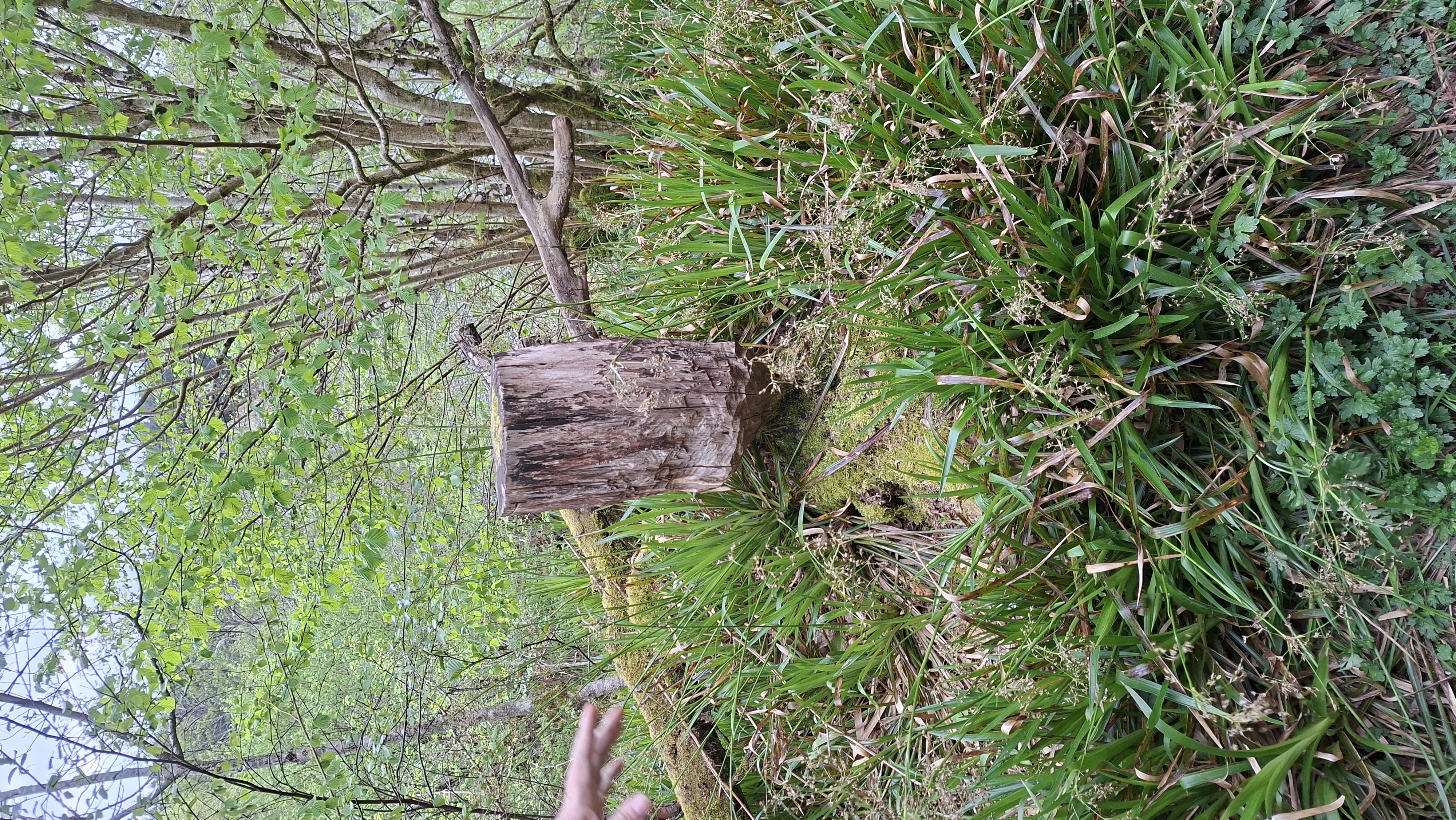
We started the walk through the woods along the forestry commission tracks and came across our first showcase, a tree with evidence of beaver gnawing. They can generally fell a tree in a night, and they only gnaw the trunk to fell them, not to eat them. Once felled they drag them near to water, as they feel safer there, and strip the leaves for food. They also strip the branches for the nutritious bark, like the skin of a potato holds lots of nutrients. They then use the branches and trunk for their dams. The dams do not block water completely, beavers are engineers, building and monitoring their dams continuously to ensure the water level stays the same. This is to allow protection for their lodges underground. Their entrances come out in the water, so they need the water levels to be just right so they cover the entrance but also don’t flood the lodge.
The second showcase we came across was the beaver canal, which is a canal of water that a beaver makes when he wants to fell trees that are further away from the water then he’d like. They feel safer within a set distance of the water, so they create these canals and divert water down them so they can fell the tree further in the forest and shuttle it down the canal. It’s easier to transport the tree, and also safer for the beaver to have a quick exit in the water if required.
We reached the main area where a beaver family lived, generally consisting of 2 adults, lifetime partners, and kits, generally 2 in each generation. They will continue to have kits each year, with them ‘moving out’ at around the age of 3 (there’s a lot to learn as a beaver), as long as there’s room in the local area for their offspring to inhabit. If there’s no room for them to expand to, they will not reproduce. We stood silently on the boardwalk with our binoculars fixed to our eyes. And within a few minutes ‘There’s one’ someone whispered. There was a slither of beaver head and bum streamlining its way through the water, very much like a tugboat someone described it as. We spend about half hour watching a couple of beavers move through the water from their lodge to the bank, where they obviously had trees to their fancy. Apparently different beaver families can have a preference of tree taste, like we have a favourite meal. We then moved onto another area on the next loch and again saw a couple of beaver slinking through the water from a distance. We also witnessed a water slap, which is when a beaver slaps the water with their tail to warn a beaver from another family that is the territory line. From this area we also had a better view of the dam on the opposite end of the loch the first beaver family lived on. We returned back via the first viewing platform and kept a look out for a little while, when it was nearing time to return to our cars we caught glimpse of a beaver on the bank. He was gnawing away at a branch, stripping it of leaves. It was hard to see looking through binoculars and with the fading light, it was now about 9pm, but it was a great sight to see, it really gave you a sense of The Lion, The Witch and The Wardrobe lol!